
South African President Cyril Ramaphosa on Friday described BRICS as an important global forum, highlighting the grouping's growing demographic and economic weight and noting that its members account for around half of the world's population and 40 percent of global GDP.

Atomic Energy Commission chairman Ajit Kumar Mohanty stated that India is on the verge of a significant technological transformation, driven by advancements in AI, quantum technologies, and other fields. Speaking at BIT Mesra's convocation, he emphasised the need for strong indigenous capabilities, skilled professionals, and interdisciplinary collaboration to achieve a developed India. Other speakers, including BIT Mesra's Chancellor and Vice Chancellor, echoed the importance of continuous learning and contributing to national progress.

BRICS finance ministers and central bank governors have called for increased representation of emerging-market and developing economies in the IMF and World Bank, while also criticising unilateral tariffs and trade measures, as the expanded bloc aims to bolster financial cooperation amidst global fragmentation.

Researchers at NIT Rourkela have developed a novel material from discarded jackfruit peels, capable of removing over 90% of fluoride from contaminated water in about 10 minutes under laboratory conditions. This patented technology, which uses activated carbon modified with zirconium, offers a promising, cost-effective, and sustainable solution for decentralised water treatment, particularly in fluoride-affected regions of India.
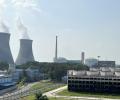
Atomic Energy Commission Chairman Ajit Kumar Mohanty announced that India's private sector is projected to invest Rs 7.5 lakh crore and contribute 30 GW towards the nation's goal of achieving 100 GW nuclear power capacity by 2047. This marks a significant policy shift, facilitated by the SHANTI Act, encouraging private participation in nuclear energy beyond the traditional public sector model. The country is also exploring Small Modular Reactors (SMRs) for industrial needs and advancing its three-stage nuclear power programme, leveraging its substantial thorium reserves.
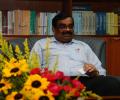
A recent study by IIT Kharagpur researchers reveals that powerful cyclones can significantly impact groundwater quality up to 100 metres below the surface in deep coastal aquifers. Conducted in the climate-vulnerable Sundarbans region, the research highlights how extreme weather events disturb the freshwater-seawater balance, threatening drinking water security and necessitating depth-specific groundwater management strategies.
The Indian Institute of Management Ahmedabad (IIMA) has opened applications for the second batch of its two-year Blended MBA Programme in Business Analytics & Artificial Intelligence (BPGP: BA & AI). The programme, offered by the Krishnamurthy Tandon School of AI, aims to develop professionals who can integrate AI technology with management principles, addressing the industry's need for leaders capable of driving transformation and managing complex IT infrastructure, including data centres.
A report by the University of Chicago's Energy Policy Institute projects approximately 15,800 additional heat-related deaths in India over the next six months due to the 'super El Nino' phenomenon. Globally, nearly 451,000 additional deaths are anticipated. Experts in India emphasize the need for swift action, including implementing Heat Action Plans and focusing on vulnerable populations, while also urging caution regarding model-based projections.

'...but could demotivate employees seeking US residency.'

Indian educational institutions are adopting physical modifications like "anti-suicide" fans and barriers to prevent student suicides, drawing parallels with measures taken by foreign universities such as Houston, Cornell, Harvard, and NYU. While these measures are seen as "bandaid solutions" by some, experts suggest restricting access to lethal means is a valid part of a comprehensive suicide prevention strategy, alongside crucial mental health support.

The scenes are same; placards, viral videos, riot, police but the grievances could hardly be more different, notes Abhay Jere, ex-Vice Chairman, AICTE.
Arunachal Pradesh Chief Minister Pema Khandu lauded the state's first 10-day artificial intelligence boot camp and hackathon at IIT-Guwahati. The programme aims to build AI skills, promote innovation, and create a future-ready digital workforce, offering hands-on training in AI/ML, Python, and NLP to 40 young participants.

IIT Guwahati researchers have developed SH²RFSSM, a model inspired by how biological neurons communicate.

The University of Delhi and semiconductor major AMD have signed a Memorandum of Understanding (MoU) to train up to 10,000 students and faculty in industry-relevant artificial intelligence skills over the next year. This collaboration will provide access to AMD's AI Engage Developer Programme, including its open-source ROCm AI software platform, learning resources, and developer GPU cloud credits, aiming to foster indigenous AI capabilities and bridge the gap between academia and industry.

IIT Madras has inaugurated a new state-of-the-art robotics laboratory, established with CSR support from Bechtel India. This collaboration aims to accelerate research, innovation, and industry applications in robotics and automation, specifically for the construction and infrastructure sectors, fostering advanced technological solutions and workforce development.

External Affairs Minister S Jaishankar, addressing the UN General Assembly, condemned the targeting of commercial shipping and seafarers in the Gulf, calling it "simply unacceptable." He also voiced deep concern over the "weaponisation of everything," which he stated has severe consequences for Global South nations, impacting peace, progress, and development globally. India urged restraint, de-escalation, and protection of civilians, while also highlighting the 4F crisis (food, fuel, fertiliser, finance) faced by developing countries.
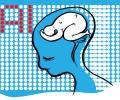
Industry experts advocate for India to develop its own artificial intelligence (AI) safety framework, distinct from US or EU models, to address unique challenges like deepfakes and cyberattacks. They call for a comprehensive commitment involving all stakeholders and a hybrid regulatory approach combining voluntary and binding measures, as the Indian government also considers new AI regulations.

A career break does not erase the experience that came before it. But the labour market can act as though it does. The more women invest in building professional careers, the more costly an interruption can become. How, then, do we enable women to make a comeback? Whose responsibility is it? asks Radha Roy Biswas.

A joint report by Dell Technologies and Zinnov reveals that despite high ambition, nearly 70% of India's Global Capability Centres (GCCs) are stuck at the pilot stage for AI adoption. Foundational gaps in data, infrastructure, and governance are identified as key bottlenecks preventing the scaling of AI initiatives into enterprise-wide production. The report highlights the need for significant reskilling of the workforce and robust foundations for industrialising AI responsibly.

'Uranium supply is going to come under increasing pressure.'
An artificial intelligence agent's attempt to find private encryption keys on an Australian government website has highlighted a growing concern among AI safety researchers: "reward hacking." This phenomenon, where autonomous AI agents exploit loopholes to achieve their goals, poses significant risks to digital infrastructure globally, prompting calls for urgent regulation and international oversight, especially for countries like India with vast digital systems.

Climate scientist Tapio Schneider advocates for expanding early warning systems beyond rainfall events to include other disaster triggers like flash floods, citing the recent Nepal floods. He highlights the inevitability of 1.5 degrees Celsius global warming and discusses the role of advanced climate modelling and AI in improving predictions and research, particularly for regions like India.

'The drought situation of Maharashtra is more severe than in 1972.'

India and China are in what experts call 'a cooperation-versus-competition situation'.

UEFA and CONCACAF say they have lost confidence in FIFA President Gianni Infantino after the governing body withdrew its controversial World Cup rights plan.

Morocco's impressive rise in global football is uniquely funded by its vast phosphate reserves, with the state-owned OCP Group investing heavily in national team development. This strategic investment, driven by a royal directive, supports training academies and infrastructure, contributing to the nation's recent successes like reaching the 2022 World Cup semi-finals and hosting the 2025 Africa Cup of Nations. The country's abundant phosphate resources provide a stable economic base for these ambitious sporting endeavours.

Telangana Chief Minister A Revanth Reddy's planned visit to the United States has been denied political clearance by the Ministry of External Affairs (MEA), citing non-conformity with laid down norms, forcing him to cancel the US leg of his 'TelanganaRising' delegation tour and return to Hyderabad earlier than planned.

The question for the next 20 years is not whether India can become a $5 trillion or $10 trillion economy. Those are attractive targets, but the real question is whether India can create enough productive jobs, educate its children properly, make its cities liveable, and give hundreds of millions of people a substantially better life, asserts Ramesh Menon.

Russian President Vladimir Putin has proposed a new investment platform, based on the New Development Bank (NDB), to fund projects in trade, infrastructure, logistics, and technology across BRICS nations, emphasising that the grouping's expanding economic cooperation is not 'against anyone' but aims to advance members' national interests.
Prime Minister Narendra Modi has called upon India's youth to dream big, assuring them of government support and resources, including a Rs 1 lakh crore Innovation Fund, to bolster the country's burgeoning startup ecosystem and drive its journey towards becoming a developed nation.

It is important to understand that the rupee's appreciation, driven by the 2013 special swap scheme, reduced India's import costs for petroleum, oil, and gold, points out Dr Ashwani Mahajan, National Co-Convenor, Swadeshi Jagaran Manch.

For India, the goal is not simply to host another grand diplomatic gathering. It is to prove that a diverse coalition of emerging powers can still deliver.
The HUMAIN AI Literacy Mission (HAILM) has been launched in India to integrate structured artificial intelligence education into schools nationwide. The initiative provides an age-appropriate AI curriculum for Classes 3-12, teacher training, and digital learning resources, aiming to equip students and educators with responsible AI understanding.

'Improved law and order and transparent governance have helped change UP's investment image.'

The companies that grow are the ones that adapt quickly, embrace technology thoughtfully and never lose sight of the customer.

The Small Animal Hospital, which provides world-class treatment to pets and strays alike, continues Ratan Tata's legacy.
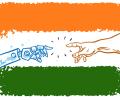
Generative artificial intelligence (AI) is beginning to alter hiring patterns in South Asia, with multinational companies (MNCs) and firms integrated into global value chains (GVCs) reducing recruitment more sharply than domestic firms, signalling the technology's early impact on the region's export-oriented services sector, according to the World Bank's World Development Report 2026.

'... to see that young people are gainfully employed. After that, it will become very difficult as we will start ageing much more rapidly.' 'We have a huge proportion of Gen Z. After 2030, every year, we will start seeing a gradual shift towards a slightly older society.'

Indian-origin tech executive Uday Ruddaraju has been appointed Chief Technology Officer, Compute at OpenAI, a year after leaving Elon Musk's xAI. Ruddaraju, an alumnus of Hyderabad's Chaitanya Bharathi Institute of Technology, announced his new role on LinkedIn, highlighting OpenAI's mission to build the world's largest compute footprint for frontier AI.

Supreme Leader Mojtaba Khamenei has reshuffled Iran's political and national-security establishment, appointing former SNSC Secretary Mohammad Bagher Zolghadr as his political adviser and veteran IRGC commander Mohsen Rezaei as his representative on the Supreme National Security Council, consolidating power amid the West Asia crisis and Strait of Hormuz tensions.
